
5 Tools to Turn Your Brand Story Into a Customer Obsession
Ask a business owner to tell you their brand story, and you'll usually hear something like this:
"We started in a small office…" "Our founder had a dream…" "After years of experience…" "Since 1998…" While these stories may be true, they're rarely the reason customers choose a brand.
Here's the uncomfortable truth: your customers care far less about your story than you think. They care about their own. And that's where most businesses misunderstand brand storytelling.
The Biggest Mistake in Brand Storytelling
Many brands believe storytelling means talking about themselves, their history, their achievements, their milestones, their founder's journey. But customers aren't looking for another autobiography. They're looking for someone who understands their challenges. The most powerful brand story isn't a company story. It's a customer story. Sharing your brand values still matters, but customers need to see themselves in the story before they care about yours, which is why customer-first storytelling should sit at the core of your branding strategy.
Why Stories Work
Humans are wired for stories. Long before we had books, advertisements, or social media, we shared knowledge through storytelling. Stories help us understand conflict, emotion, transformation, and identity. That's why we remember stories better than facts, not because stories are entertaining, but because they're relatable. We see ourselves inside them. The same principle applies to branding: customers engage with a story when they recognize themselves in it.
The Customer Is Always the Main Character
One of the biggest shifts a brand can make is moving from "look what we've built" to "look what you can become." This changes everything. Your customer becomes the hero. Your brand becomes the guide. Your product becomes the tool. And success becomes the transformation. This simple shift makes every piece of communication dramatically more engaging. Understanding your target audiences is the first step to making them the hero of your story.
Every Great Brand Story Follows the Same Pattern
Whether it's a movie, a novel, or a memorable brand, most great stories follow a similar structure: someone wants something, something stands in their way, they meet a guide, they gain a plan, they overcome the challenge, and they transform. Notice something? The guide isn't the hero. The guide helps the hero succeed. That's exactly the role your brand should play in every customer relationship.
Practical Tool #1: The StoryBrand Framework
Donald Miller's StoryBrand framework is one of the most practical brand storytelling models for businesses. It follows a simple sequence: a customer has a problem, they meet a guide, the guide gives them a plan, the guide calls them to action, the customer avoids failure, and the customer achieves success. This structure also gives you a clear foundation for brand messaging that speaks directly to what customers want.
Notice who's missing from the spotlight: the company. Because customers don't want another hero. They want help becoming one.
Practical Tool #2: The Customer Transformation Canvas
Instead of describing your services, describe transformation. Map two columns, before and after:
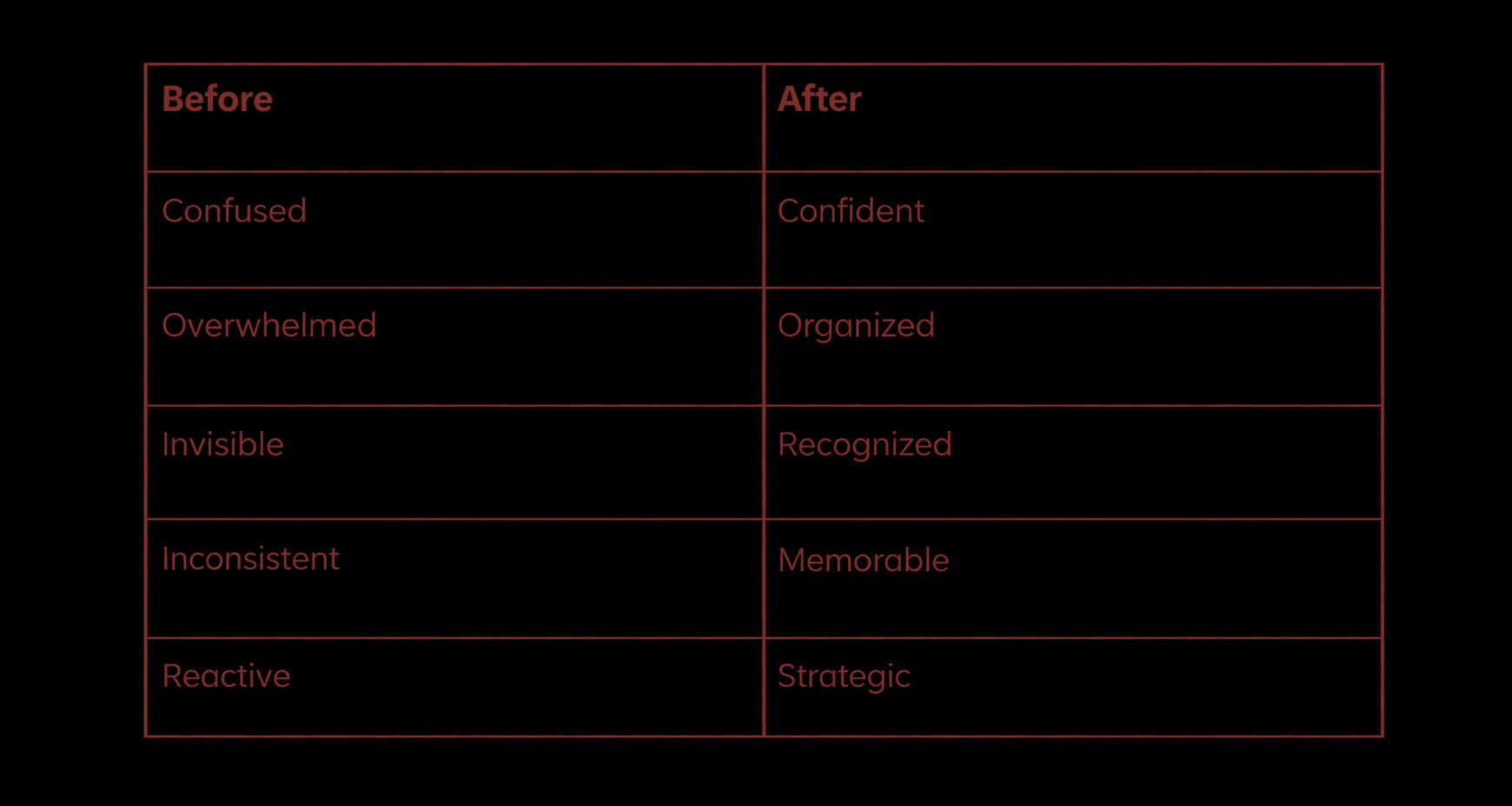
Customers rarely buy products. They buy the journey from the left column to the right. Your brand story should illustrate that journey. This shift also helps you stand out from competitors who are still talking about themselves.
Practical Tool #3: Apply the Hero's Journey
Joseph Campbell's hero's journey has influenced countless books, films, and brands. For branding purposes, simplify it into five stages: current reality, challenge, decision, transformation, and new identity. Every piece of communication can reinforce one of these stages, keeping storytelling focused on progress rather than promotion. Applying this framework consistently is one of the simplest paths to brand differentiation.
Practical Tool #4: Build a Story Library
Your brand doesn't need one story; it needs many. Collect customer success stories, behind-the-scenes moments, product development stories, employee journeys, lessons learned, and client transformations. A story library is also a valuable resource for internal communication, helping teams stay aligned around the same customer narratives. Over time, this library becomes one of your most valuable marketing assets. Real stories create trust faster than polished advertisements.
Practical Tool #5: Find the Emotional Turning Point
Every memorable story has one decisive moment. Ask: when did the customer realize they needed help? What almost made them give up? What changed after working with us? What moment made them say, "this was worth it"? Those moments are far more compelling than listing features or statistics. These emotional turning points can also inform your brand identity systems, ensuring every visual and verbal touchpoint reflects the same transformation.
Your Story Doesn't End at the Sale
One mistake brands make is ending the story when the customer buys. But the purchase is only the midpoint; the real story begins afterward. How does the customer's life improve? How do they feel? What new opportunities become possible? How do they describe the experience to others? That's the story future customers want to hear.
Stop Telling. Start Showing.
The best story doesn't announce transformation; it demonstrates it. Instead of saying "we're innovative," show the challenge you solved. Instead of saying "we're customer-centric," tell the story of someone whose life became easier because of your work. Showing rather than telling is also where your brand personality comes through most authentically.
Stories create emotional proof. Claims create skepticism.
